
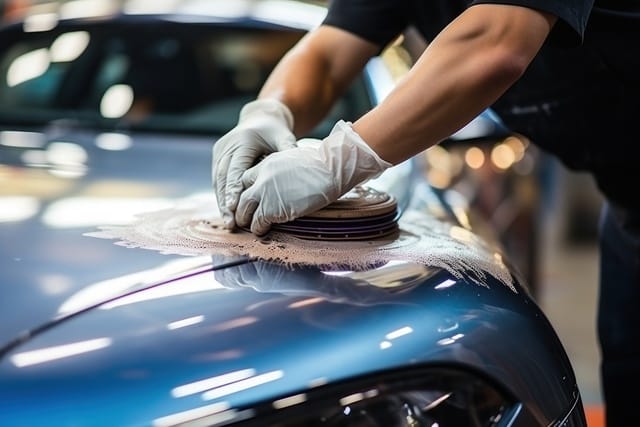
Refining Brilliance: The Sanding Process in Paint Correction
Sanding: Sanding is a fundamental technique in paint correction used to smooth out imperfections on the vehicle’s surface. It involves the use of sandpaper or abrasive pads to level uneven areas, remove deep scratches, and eliminate orange peel texture. This process prepares the paint for polishing and enhances its overall smoothness and shine.
Wet Sanding: Wet sanding is a more advanced form of sanding used to refine the paint surface further. It involves spraying water or a lubricating solution onto the paint while sanding with a fine-grit sandpaper. This method helps prevent heat build-up and reduces the risk of damaging the paint. Wet sanding is effective for removing deeper scratches, water spots, and other stubborn imperfections, resulting in a smoother and more flawless finish.
Dry Sanding: Dry sanding, on the other hand, is performed without using any lubricating solution. It is typically used for the initial leveling of the paint surface with coarser sandpaper grits. Dry sanding is less common in paint correction due to the higher risk of damaging the paint and creating visible scratches. However, it may still be used in specific circumstances where wet sanding is not suitable or necessary.
Each sanding method plays a crucial role in achieving a professional paint correction result, ensuring the paint surface is smooth, free of imperfections, and ready for the application of polish and protective coatings.

